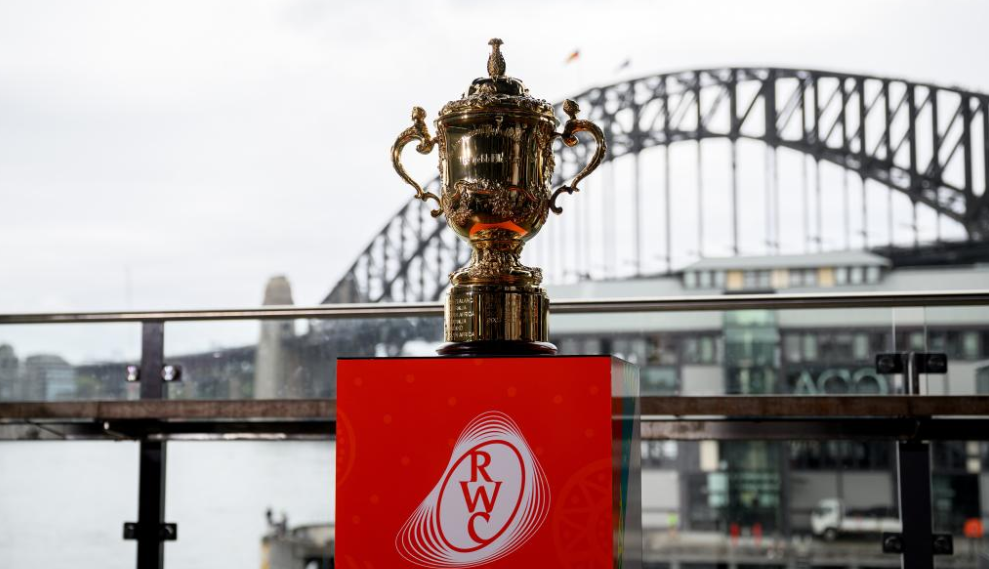
First – the headlines: the 2027 edition expands to 24 teams, divided into six pools of four teams (Pools A-F).
Instead of the old five-team pools, we now get 4-team pools, which means each team plays three group matches.
And for the first time ever – a Round of 16 knockout stage, with the top two from each pool (12 teams) plus the four best third-place finishers progressing.
The logic: more drama, more variety, more opportunity for upsets. But also – more risk of shock exits.
Seedings were based on world rankings at the time of draw. Teams were split into four “bands” of six. Each pool gets one from each band, except hosts Australia national rugby union team – they were pre-assigned to Pool A.
With that in mind – here’s how it landed.

The Pools: Where the hand grenades landed
Pool A: New Zealand, Australia, Chile, Hong Kong China
Boom. Right out the gate – a Trans-Tasman blockbuster. The hosts (Australia) get thrown straight into the shark tank with the mighty All Blacks. That’s a spectacle match just for starters.
Then you’ve got two relative underdogs (or dare I say “emerging bodies”) in Chile and Hong Kong China. On paper, New Zealand and Australia should dominate, but with rugby’s unpredictable tides, if the hosts catch lightning at home and the minnows catch a beat – things could get spicy.
Pool A will likely play out as a two-horse race for first, but third place could be bloody if Chile or Hong Kong hit form – and that third-place slot is now golden because of the “best third-place qualifies” rule.
Pool B: South Africa, Italy, Georgia, Romania
For now, Pool B looks like the playpen for the reigning champs – the Boks. South Africa should stroll through, but that’s rugby arrogance talking. Italy, Georgia and Romania are no mugs.
Georgia in particular has been steady; maybe not on Tier-one superstardom level yet, but dangerous when underestimated. Romania – well, they’ve got a reputation of upsetting form. Italy’s on a lean year, but given the global stage and a shot at the knockouts, they might be playing with nothing to lose.
If South Africa slips up (injuries, complacency, jet-lag, who knows) – this group could deliver a surprise. Third place might be a tight fight.
Pool C: Argentina, Fiji, Spain, Canada
Here we go – Pool C brings a spicy mix. Argentina should lead, but Fiji are never to be taken lightly: chaos, flair, explosiveness. If they catch fire, this could be dynamic.
Spain and Canada – both with some pedigree but historically patchy at World Cups – could play spoiler. Spain especially: every now and then they birth a performance that shocks. And with third-place potentially doing the job, ambition will be high.
If Argentina and Fiji dominate, it’s straightforward. But if either slips – Spain or Canada could sneak through. Pool C is a classic “dark-horse or underdog’s dream.”
Pool D: Ireland, Scotland, Uruguay, Portugal
Ah – bloodsport. Ireland vs Scotland is a fixture that carries history, rivalry and a whole lot of edge. Pool D is arguably the most emotionally charged pool.
Uruguay and Portugal – respectable scrappers, tough, gritty, and capable of throwing a bloody match when a Tier-1 side underestimates them. Third place here could be hard-earned.
Prediction: Ireland top (if they bring their A-game), Scotland second if they avoid collapse – and third place could be everyone else fighting over scraps, which in 2027’s format could still lead to Round of 16.
Pool E: France, Japan, United States, Samoa
Pool E – a wild ride waiting to happen. France should dominate – deep, experienced, skillful – but tournaments have a nasty habit of knocking giants flat.
Japan and the USA have improved massively; both can play structured, physical, pressure rugby. Samoa – rugged, passionate, savage breakdown, unpredictable flair.
This pool is far from a landslide. The gap between the top and bottom here is narrower than you’d expect. For all their star power, France cannot afford to sleepwalk. And if they do – we might see one of the minnows storm into the knockout rounds.
Pool F: England, Wales, Tonga, Zimbabwe
Rivals. History. Fireworks. England vs Wales. Even without pool-stage danger, that match alone justifies watching the pool.
Then throw in Tonga – dangerous, physical, unpredictable. Zimbabwe – long absence, maybe rusty, maybe scrappy, maybe they shock, who knows.
On form, England should cruise first, Wales second – but Tonga can obliterate complacency. And if scratchy weather, hit-and-run tactics, or bruising forward-pack rugby comes into play – Pool F could deliver a surprising qualifier for Round of 16.
Why this draw changes everything – and why we’re all winners
- More teams = more stories. Twenty-four nations, some traditional, some “new kids on the block,” means we get David vs Goliath, but also mid-tier vs mid-tier tension, upsets, heartbreak, glory.
- Third-place meaning – a “safe third” used to be nothing. Now it could be the golden ticket. That alone makes the Pool stage infinitely more interesting.
- Rivalries resurrected. Historic clashes like All Blacks vs Wallabies, England vs Wales, Ireland vs Scotland – all in pool, all meaningful, all potentially tournament-shaping.
- Dangerous minnows – Chile, Hong Kong China, Georgia, Romania, Spain, Portugal, Zimbabwe, Samoa, Tonga – these teams will be looming. Underestimate them at your own peril.
- Knockouts sooner. A Round of 16 means fewer meaningless dead rubbers at the end of pools, more stakes early, more urgency.
This is a World Cup that doesn’t let you coast. Every match counts.
Potential knockout / playoff matchups – and how it could go down
Here’s how things might play out in the Round of 16, assuming the “top two + four best third place” format – and with who finishes where being obviously hypothetical.
- Pool winners (A-D) will face third-place teams from other pools (depending on who qualifies for best-third slots). So a pool winner could end up facing a “giant-killer third place” – imagine the winner of Pool A (say New Zealand or Australia) versus a dark horse third from Pool C or E. That’s juicy.
- Winners of Pools E and F have a different draw: they play runners-up from Pools D and B respectively. That’s interesting – so finishing top of E/F gives a more predictable but still dangerous tie.
- Runners-up from Pools A and C will take on the runners-up from Pools E and F – meaning middle-of-the-pack teams can face off, and upsets feel possible.
So – imagine this: Pool C’s second-placed Argentina or Fiji vs Pool E’s runners-up USA or Samoa – could be fireworks. And what if Pool D’s runner-up (Scotland) draws Pool F’s runner-up (Wales)? That’s knockout history before quarterfinals.
Third-place survivors from tough Pools (like D, E or F) could emerge bruised, but battle-ready – and face pool winners who might be a bit rusty or cocky. Madness.
The knockouts could start with ugliness, drama, and upsets. And that’s the point.
The “Blindsided” Impact: Who should fear who – and why this World Cup will bite
As I see it, this draw does more than sort teams – it tips the board over.
- If you’re a “traditional giant” (New Zealand, England, France, South Africa, etc.), you’re no longer guaranteed a smooth ride. A slip-up or bad day, and you could be gone, or battling a third-place qualifier that’s red hot.
- If you’re a “minnow” or “up-and-comer,” this is the moment. With only 4 teams per pool, fewer games, but every game counts equally. Game plan + guts + discipline = legitimate shot at Round of 16.
- For fans – this is the World Cup we’ve begged for. More variety, more nations, more unpredictability. The underdog isn’t just a glorified parallel act this time – they’re part of the main show.
- For tournament planners – this works. The expanded format keeps pressure high, ensures fewer blowouts, and makes sure that even “mid-tier” games matter. 52 games, 24 nations, global engagement. It’s a statement.
In short: this is not a World Cup. It’s a powder keg.
Final verdict
If you asked me – with this draw, the 2027 World Cup isn’t just another edition. It’s a revolution.
Fans of flair, chaos, underdog glory, and chaotic knockouts – rejoice. Because this could be the tournament where legends are made, reputations shattered, and surprises served cold. Traditional powers better bring their A-game; there’s no “easy” in 2027.