Here’s a detailed take on the global reaction to Eben Etzebeth’s red card – how the rugby world has responded, the stakes, and where this leaves him and the sport.
⚠️ What happened: the red card incident
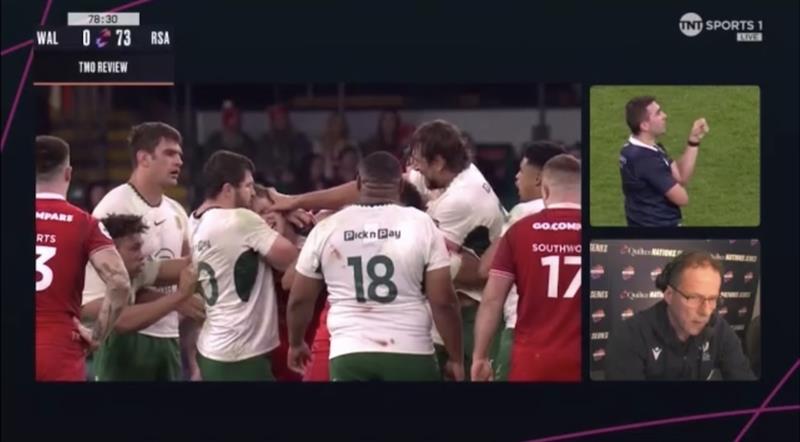
- On November 29, 2025, during the match between Springboks (South Africa) and Wales national rugby union team, at the Principality Stadium in Cardiff, the Springboks cruised to a 73-0 win. (Reuters+2 ESPN+2)
- In the 79th minute, in the dying moments of the match, Etzebeth was shown a straight red card. The reason: he allegedly placed his thumb in the eye of the Welsh flanker Alex Mann during a scuffle. (Norwalk Hour+2San Antonio Express-News+2)
- Match officials, after video review, confirmed the out-of-play foul: the referee on field, Luc Ramos, said there was “a clear thumb in the eyes.” (AOL+2Fox Sports+2)
- This marks the first red card in Etzebeth’s 141-test, 13-year international career. (AOL+2Norwalk Hour+2)
- The red-carded incident overshadowed what was otherwise a record-equalling demolition – 11 tries, comprehensive dominance, and the worst home defeat in Welsh history. (Reuters+2The Guardian+2)
That’s the factual base. From there, the reactions have rippled worldwide – raw, divisive, and full of consequences.
🌍 Global and South African reaction: shock, outrage, and uneasy defence
– Shock and condemnation (international/neutral media, players, pundits)
- Many outlets described the act as a “blatant eye gouge” – a “pointless act of thuggery.” (The Times+2RUGBY.com.au+2)
- Commentators emphasised the seriousness: eye-gouging is among the most dangerous acts in rugby, given the risk of permanent injury to the victim. As such, sanctions are severe; bans can start around 12 weeks but stretch beyond 24 weeks depending on severity. (RugbyPass+2RUGBY.com.au+2)
- Even some former teammates and legends – notably Bryan Habana – publicly condemned the incident, calling the red card justified and warning of a “lengthy time on the sidelines” for Etzebeth. (RugbyPass+1)
- For many, this wasn’t just a mistake or a momentary lapse – it was a breach of the basic ethical and safety code the sport tries to uphold. Reactions ranged from “disgraceful” to “unacceptable,” with strong calls from across the rugby community for Etzebeth to face a severe ban, if not consider stepping away entirely. (Reddit+2Reddit+2)
– Defensive voices (teammates, some supporters, South African media)
- A number of voices within the Springbok camp defended Etzebeth – not by denying what happened, but by arguing it might’ve been unintentional. (The Post+2IOL+2)
- Springboks captain Siya Kolisi said he believed “it will be revealed to be an accident,” that Etzebeth didn’t “mean to do it,” and that apologies had already been offered. (The Post+1)
- Some fans and media in South Africa emphasised Etzebeth’s long and largely clean career, asking for perspective: 141 caps, years of service, and major contributions to the national team. For them, this single incident – though serious – should not “erase” his legacy. (RugbyPass+2africanewsglobal.co.za+2)
- Others argued pragmatically: the national team is built on physicality, toughness, and intimidation, and such aggressive edge has long been part of the “Boks identity.” They worry that over-sanitising the game may dilute what has often given South Africa an advantage. (africanewsglobal.co.za+1)
🧑🤝🧑 Fan-based reaction & social media: polarised, raw, unforgiving
Beyond formal media, the response in forums, social media and fan communities has been especially intense and emotional:
“Deserves a lengthy ban. So disappointing.” (Reddit)
“Such a shame cause he such a legend … He needs to set better example for the young players coming up.” (Reddit+2Reddit+2)
- Some fans see the incident as a “permanent, glaring stain on his record.” (RugbyPass+2Reddit+2)
- Others – admittedly fewer, but vocal – argue for leniency: that a single moment of madness shouldn’t overshadow decades of service. (Reddit+2Reddit+2)
- There are calls for more than just a ban – some fans say Etzebeth should never play for the Boks again. (Reddit+1)
This divides neatly along lines of those who believe in “legacy above individual mistakes,” and those who see rugby’s future as cleaner, safer – and less tolerant of violence.
🏉 Institutional & coaching response: damage control, discipline, and image
Even within the leadership of the Springboks and broader rugby governance, there’s been a swift, measured reaction:
- Coach Rassie Erasmus didn’t shy away. He called the red card “justified,” said “the optics weren’t great” and conceded it was “definitely not the way we’d have liked to have ended the game.” (ESPN+2ESPN.com+2)
- The very fact that video review (TMO) was used and resulted in such a serious dismissal signals something: governing bodies are under pressure to enforce stricter standards. Safety, sportsmanship, and global image – all are at stake. (Planet Rugby+1)
- Ahead of this tour, Etzebeth had hinted that the team wouldn’t “change style” despite a spate of recent red cards on tour. He argued that being cautious out of fear of officiating wasn’t the answer. (africanewsglobal.co.za) Now – after this incident – that stance looks like hard reckoning.
Clearly, the policy isn’t “look the other way.” The sport is signalling that certain kinds of aggression – particularly dangerous foul play – are non-negotiable.
⚖️ The looming consequences: bans, legacy damage, questions for the future
- By the rules governing foul play (especially eye-gouging), the usual minimum ban starts at 12 weeks, but serious cases – especially if intent or reckless danger is deemed high – can lead to 24-week suspensions or more. (RugbyPass+2RUGBY.com.au+2)
- Given Etzebeth’s international standing, long career and influence – many expect governing bodies to treat this as a statement case. The message: “No one is above the laws of the game.”
- Beyond suspension: there’s real reputational damage. For a player who’s been celebrated for years, this could taint how he’s remembered – especially among fans and pundits who believe this goes beyond a freak accident.
- For the team and coaching staff, it’s a turning point. Will the Springboks adjust their culture, discipline, or defensive aggression? Or will they risk further sanctions to maintain “physical identity”?
🎯 Bigger picture: What this says about modern rugby – safety, legacy, accountability
The Etzebeth red card isn’t just about one man’s mistake. It’s becoming a kind of symbol for bigger questions:
- Rugby globally seems to be undergoing a tension between physical tradition and player safety / sportsmanship – between old-school toughness and evolving standards of respect and fair play.
- For fans: nostalgia and loyalty often clash with evolving norms. Many will always remember the monsters of old packs as heroes; newer generations, or neutral fans, may see violence as unacceptable.
- For institutions: consistent, public enforcement matters to preserve the sport’s legitimacy – especially in a world increasingly intolerant of dangerous or “dirty” play.
If there was ever a moment to say: “This is where rugby draws the line,” this incident may be it.
✍️ Where it all leaves Etzebeth – and what might come next
- He’ll almost certainly be suspended – perhaps for many months. That means missing out on club rugby, possibly end-of-season tournaments, and could influence how his club Sharks (and other teams) view his place in their future plans. (The Post+2Planet Rugby+2)
- The “legend” narrative is under stress. Even long-time supporters and former teammates have voiced that while his career until now has been stellar, this incident “must be judged seriously.” (RugbyPass+1)
- For the Springboks and global rugby: expect harsher scrutiny on physical confrontations, more frequent use of video review, and possibly a tightening of discipline across the board.
In short: Etzebeth’s red card won’t just be a footnote in a 73-0 win. It could be a turning point – for a player, a team, and perhaps for modern rugby’s boundaries of aggression.